Upravit stránku

Packaging powdered products is often more challenging than it may seem at first glance. Dust gets everywhere you don’t want it – into the seal, onto the machine, and into the surrounding environment – quickly turning a well-functioning process into a source of complaints, downtime, and frustration.

A functional solution therefore does not rely solely on choosing the right machine, but on a combination of proper dosing, well-thought-out design, and effective dust extraction. And most importantly: without testing the real product, it remains just theory.

Why packaging powdered products is more demanding

Powdered products (e.g. ground spices, flour, starches, cocoa, powder blends, or laundry detergents) have specific properties:

  • they easily disperse into the environment
  • they stick to machinery
  • they enter the sealing area of the package

The product’s behavior itself plays a crucial role and can vary significantly:

  • flowability and discharge characteristics
  • density
  • moisture content
  • electrostatic charge

A typical scenario: the package looks properly filled at first glance, but dust in the seal compromises its tightness. The result is lower packaging quality, higher product spoilage risk, increased defect rates, and issues that often only appear in logistics or with the end customer.

Example of powdered products
Flour, ground cinnamon, freeze-dried coffee, curry spice, matcha tea

The biggest risk: dust in the seal

This is a critical point that determines the quality of the entire packaging.
If dust enters the sealing area, the package may not be properly sealed. This may become visible immediately or only after some time.

The type of packaging material also plays a major role:

different films have different resistance to dust in the seal area
PE is usually more tolerant than multilayer laminates
material thickness is important
correct sealing temperature must be set depending on the film type

This is why even seemingly minor details should not be underestimated when dealing with powdered products.

While performance or price is often the focus when selecting technology, in real production practice something else is essential: a high-quality seal is not a detail, but the foundation.
 

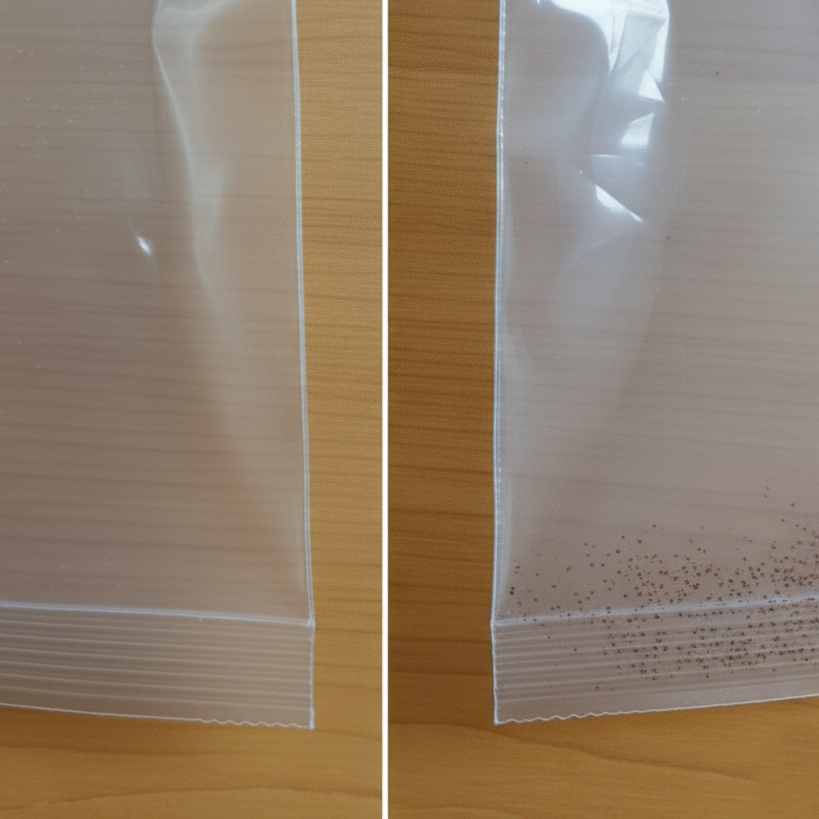
Dust in the seal is a major issue
 
Comparison of a clean seal vs. a contaminated seal

How to solve powdered product packaging in practice

A well-designed solution is typically based on several key pillars: dosing, construction, extraction, and maintenance.

1. Proper dosing type

For fine and powdered products, screw dosing is recommended.
Main advantage: the product is transported in a controlled, enclosed space. This differs from volumetric feeders or combination scales, which are better suited for coarser or piece-based materials.

2. Machine design

Dust is not only about dosing. The machine construction itself plays a major role, as well as the integration of the dosing system and the workplace layout. Helpful measures include:

  • covering the upper area around the dosing unit
  • covering exposed parts or even the entire machine
  • well-designed material flow
  • emphasis on easy cleaning and maintenance

For powdered products, filling head design also helps: filling heads are often inserted deep into the bag, reducing drop height and minimizing dust turbulence.

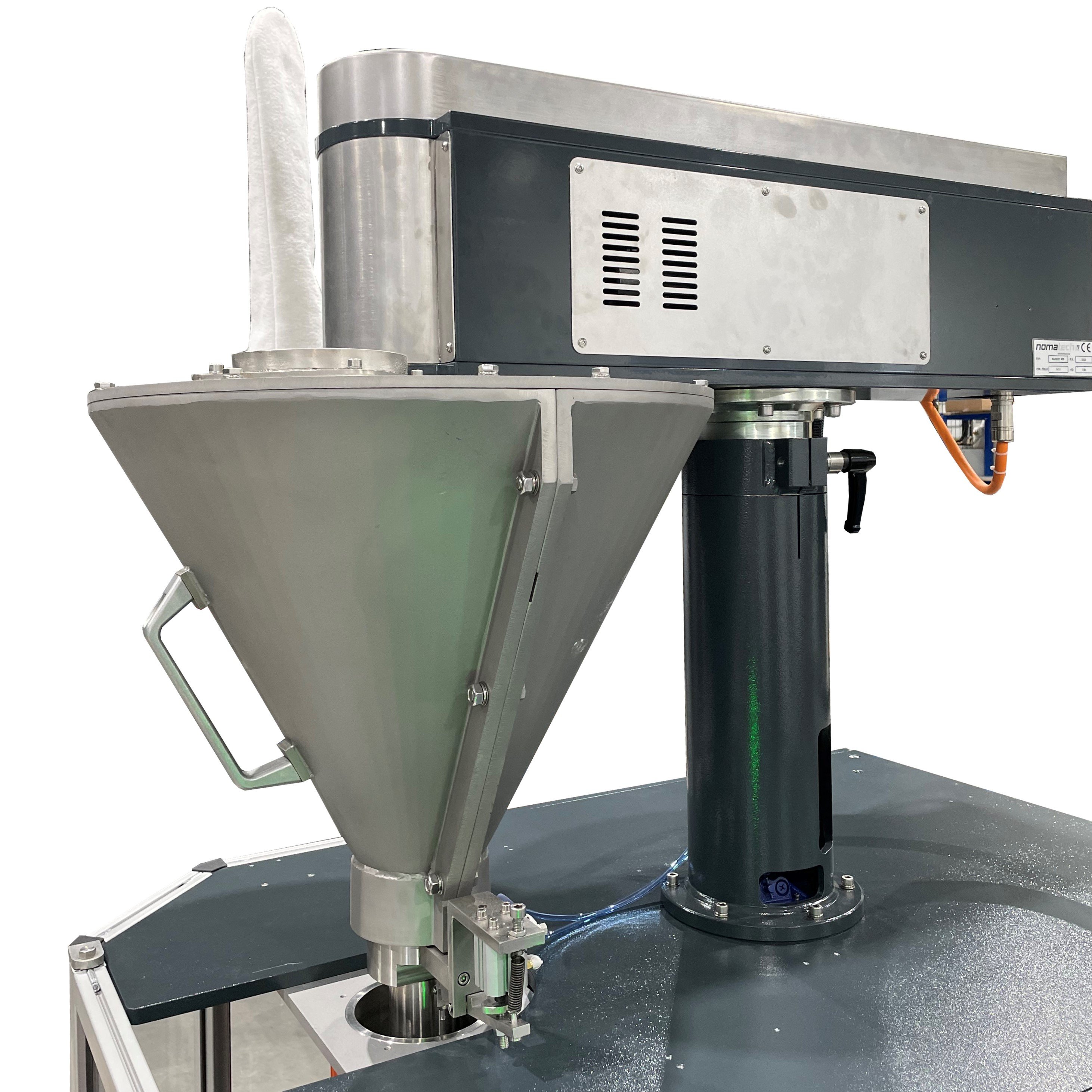
Auger dosing units are suitable for powdered and dusty products
Auger dosing unit RACKET-S

3. Dust extraction

Dust extraction helps remove particles from critical areas, especially from the sealing zone. The system should be prepared for connection to a central extraction system.
It also:

  • improves workplace cleanliness
  • stabilizes the packaging process
  • reduces the risk of complaints

For highly dusty products, maintenance requirements are generally higher than for standard bulk materials.

4. Regular maintenance

Without thorough and regular maintenance, even the best technology will not perform long-term. With powdered products, this is even more critical – dust buildup directly affects seal quality, dosing accuracy, and overall process stability, as well as operator health.

Typical tasks include:

  • daily cleaning of critical areas (sealing zone, dosing system)
  • inspection of extraction filters and ducts
  • removal of deposits affecting equipment function
  • cleaning of the entire machine, accessories, and surrounding area
     
Machine and equipment maintenance is a key step in dusty product dosing and packing.
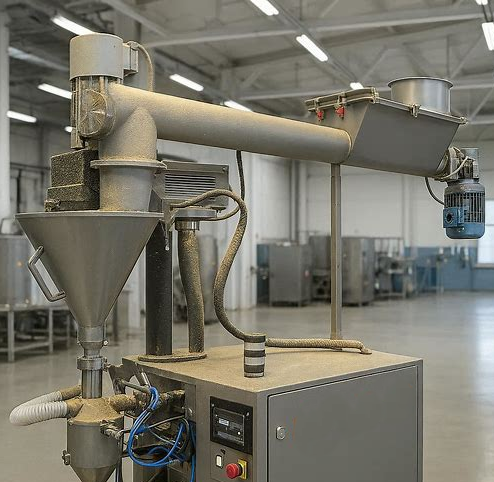
Dusty equipment

5. Antistatic effects and electrostatic charge

Electrostatics plays a significant role with fine powders. The product may stick to the film and machine parts, negatively affecting dosing and sealing quality.

Possible solutions include:

  • ionization of packaging film using antistatic systems
  • proper grounding of equipment
  • selection of suitable contact materials

6. Safety and ATEX

In some cases, explosion risk (ATEX) must also be addressed.
This includes:

  • compliance with ATEX standards
  • proper ventilation and extraction design
  • equipment grounding

What to verify before choosing technology

The biggest mistake? Decisions based on presentation impressions. With powdered products, it is necessary to go deeper and verify real behavior in practice.

What to verifyWhy it mattersHow to test
Product behaviorevery powder behaves differentlyreal sample testing
Seal qualitydetermines package tightnessleak testing
Dosing accuracyaffects losses and stabilitypractical dosing test
Dust levelcritical for system designsimulated operation
Extraction performanceaffects stabilitysystem integration design
Cleaning & maintenanceaffects daily operationvisual inspection

Seal quality testing may include:

  • pressure leak tests
  • peel strength tests
  • visual or camera inspection
     

When one solution is not enough

A universal solution is not always possible, especially when packaging multiple product types – from very dusty to finely milled materials. Each behaves differently and requires a specific approach.

A similar challenge was solved for the organic spice producer from Austria, where a compact line was designed to handle a wide range of products in limited space while maintaining cleanliness, accuracy, and stability.

It was a challenge. The result was a compact line that meets demanding requirements for cleanliness, accuracy, and stability – and the customer is satisfied.

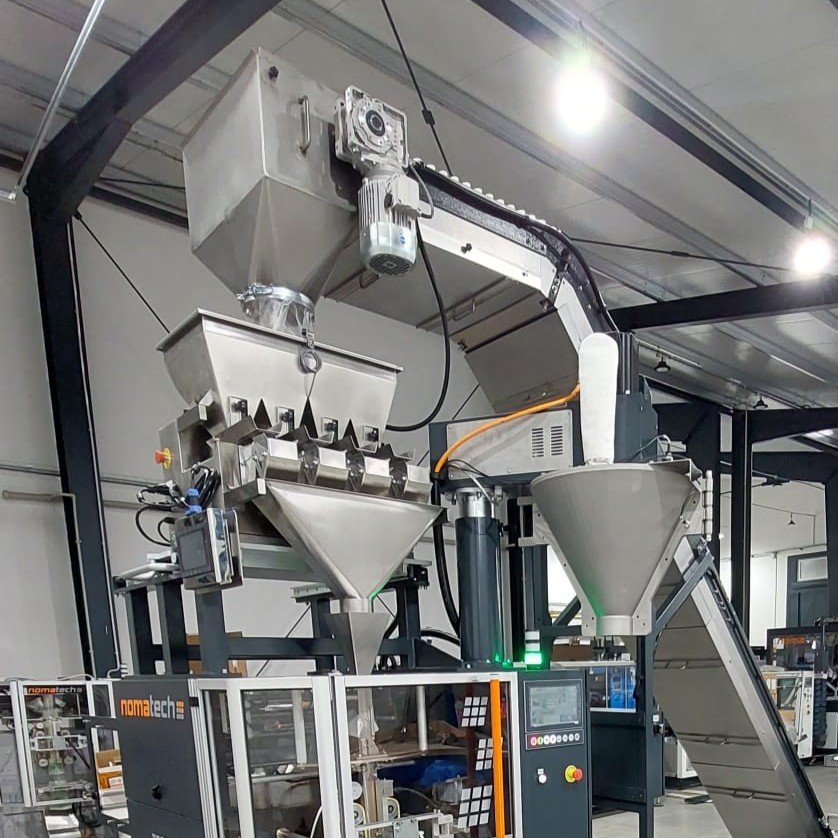
Packaging machine equipped with 2 different dosing units - auger doser and linear weighers
Two different dosing units

Economic impact of poor design

Poorly designed powdered product packaging has not only technical but also significant economic consequences:

  • increased defect rates
  • complaints and returns
  • product losses during dosing
  • frequent cleaning and production downtime

Investment in a proper solution typically pays off quickly.

Are you dealing with a similar issue?

Do you have a great product, but it is too dusty and causes sealing problems?
We can look at it directly in your production and propose a suitable solution.
Leave us your contact – we will get back to you.


Frequently Asked Questions | FAQ

Nahoru

This website uses cookies

This website is using cookies to provide services, personalize ads, and monitor traffic. By continuing to use this site you are agreeing with usage of cookies. More information.

Settings

Your privacy is important. You can choose from the cookie settings below. More information.