
How did we solve stickpack coding for batch numbers and expiry dates? The VOLCANO 250S10 packaging machine produces up to 350 sachets per minute. Find out how it works.
Search term must have more than 2 characters.
For dietary supplements, packaging marking is far more than a formality. Every package must be traceable, legible, and correctly coded.
This was exactly the challenge presented to us at NOMATECH by a contract manufacturer of dietary supplements and food products. They required a high-performance packaging line for single-dose powdered products that could not only package the product but also accurately print the required information on every individual sachet.
We designed a complete solution based on the 10-lane VOLCANO 250S10 vertical packaging machine. The line includes an integrated stickpack printing system supplied by the Czech manufacturer TS Electronics Zlín, together with a downstream cartoning machine. The result is a stable production output of up to 350 stickpacks per minute while maintaining excellent print quality and readability.
The customer is a contract manufacturer providing complete services for its clients, from blend preparation to final packaging. In practice, this means diverse projects and frequent changes of products, batch numbers, and expiry dates. In this application, a powdered dietary supplement was packed into 5 g stickpacks measuring 30 × 120 mm.
The customer’s requirements were clear:
A stickpack is a narrow sachet designed for single-dose packaging of powders, liquids, or pastes. Compared to larger packages, it offers only a very limited area for printing.
In this project, the print had to be applied longitudinally, in the direction of film movement. This is more demanding than conventional sachet printing, where information is often printed across the package, providing more available space and requiring only one sachet to be marked per cycle.
With a 10-lane machine, achieving high-quality printing in a single lane is not enough. The same result must be delivered simultaneously across all 10 lanes. Each web must maintain precise print positioning, sufficient contrast, and clear readability.
“The greatest challenge with this 10-lane stickpack machine was achieving reliable longitudinal coding on extremely narrow sachets at high production speeds.”

In theory, ten separate printers could have been used. However, this would have resulted in significantly higher investment costs, a more complex mounting system for ten print heads, more demanding setup and servicing, higher operating costs, and more components requiring maintenance.
Another theoretical option was a single moving print head. However, on a multi-lane packaging machine, such a solution would compromise stability and print quality while requiring a reduction in production speed.
We proposed a fully integrated line in which all processes seamlessly follow one another:
The packaging machine VOLCANO 250S10 forms single-dose stickpacks from a roll of heat-sealable packaging material, doses the product, and seals the package. Thanks to its 10-lane configuration, it can produce large quantities of single-dose sachets in a short time.
The coding system was integrated so that printing is applied directly onto the film web before it is divided into individual lanes, formed into sachets, and filled with product. This eliminates the need for coding finished sachets or applying labels.
Finished stickpacks with the required printed information then proceed to the cartoning machine for final packaging.
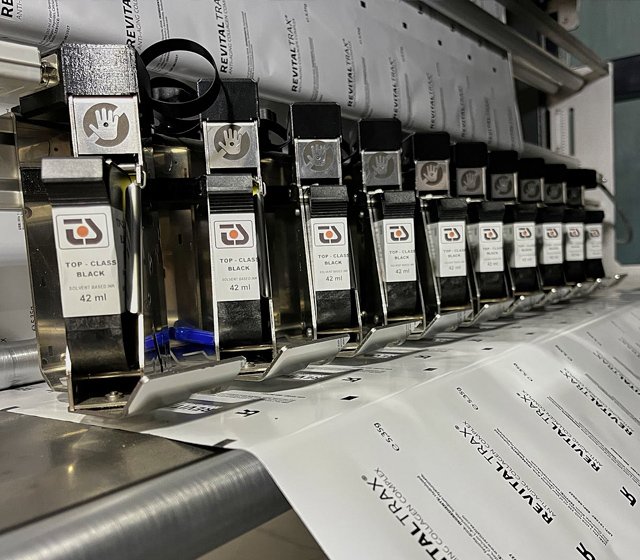
For this application, a TS Electronics inkjet printer based on Thermal Inkjet (TIJ) technology was selected. The customer required coding that would be precise, highly legible, and virtually maintenance-free.
“Working with TS Electronics Zlín was a reliable choice thanks to their experience in integrating TIJ technology into multi-lane vertical packaging lines. We also appreciate supporting Czech manufacturers and local technologies whenever possible.”

| TIJ | CIJ | |
| Maintenance | Virtually maintenance-free; replacing the cartridge also replaces the print head | Requires regular cleaning, flushing, and servicing |
| Print Quality | High resolution (up to 600 DPI), excellent readability of small characters and codes | Lower resolution, better suited for larger text and simpler coding |
| Operational Cleanliness | No solvents; ink is contained within the cartridge | Uses inks and solvents that require handling and replenishment |
Integrated sachet printing saves time by eliminating additional process steps. Finished sachets no longer need secondary printing or label application. The risk of unmarked sachets or incorrect batch information is significantly reduced.
For a contract manufacturer, this is also important from a logistics and production planning perspective. Frequent product changes require frequent updates of printed information. With coding integrated directly into the packaging line, variable data can be managed within the production process itself.
The result is a cleaner workflow, reduced handling, and a lower risk of complaints caused by missing or illegible information.
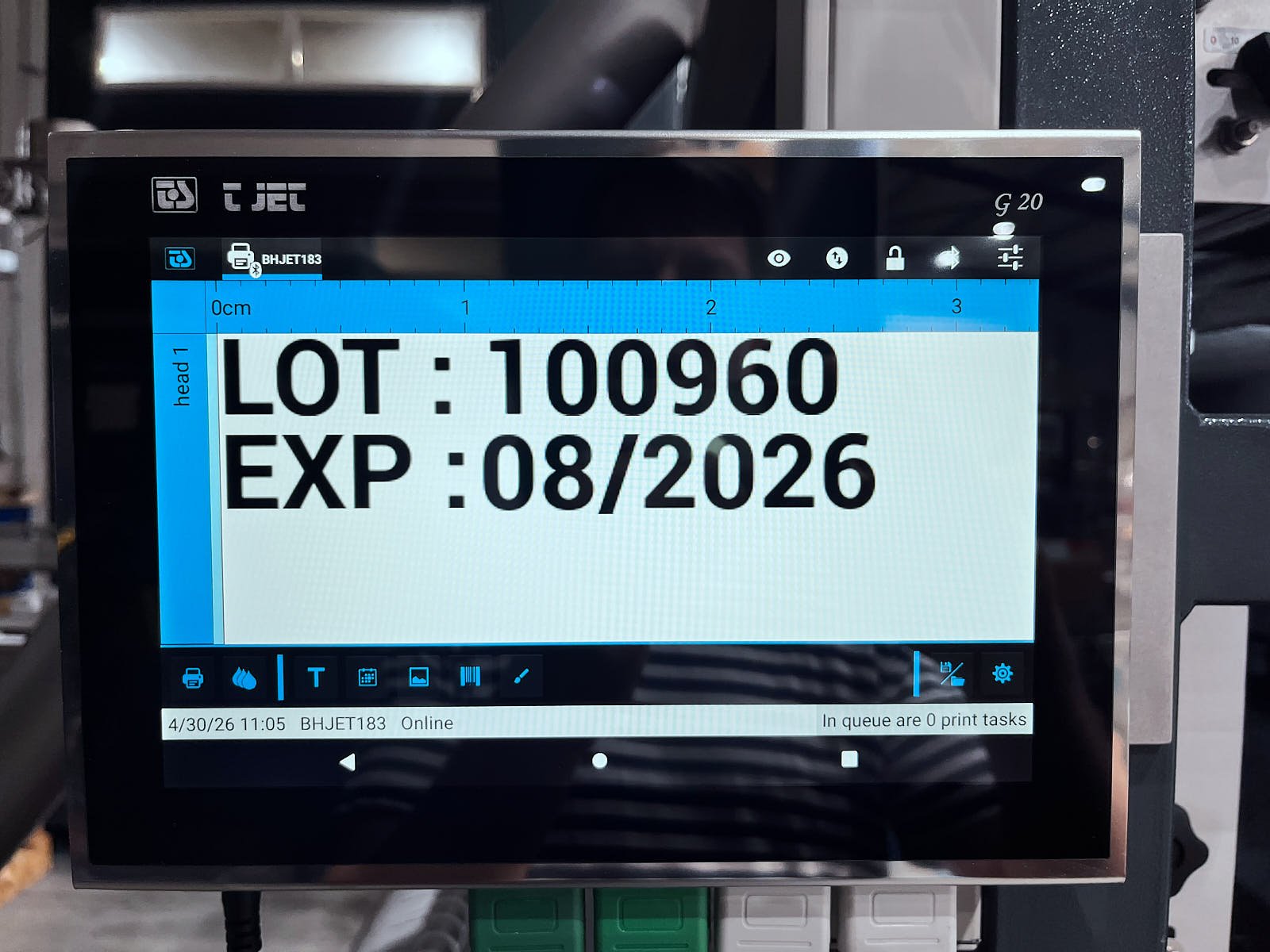
The customer received a solution that successfully combines high throughput, accurate dosing, reliable coding, and automated cartoning. The capacity increase is substantial: at maximum speed, the line can produce up to 21,000 sachets per hour. Compared with single-lane or semi-automatic solutions, this represents a significant productivity improvement while requiring minimal operator involvement.
This project demonstrates that even a relatively small detail, such as printing on a narrow sachet, can determine the success of an entire packaging line. If coding does not work reliably, production does not work reliably. That is why the solution had to be designed as an integral part of the machine from the very beginning.
“The integrated system enables precise printing of required information simultaneously across all 10 lanes without additional coding operations. Another major advantage is the maintenance-free design. The result is stable production of up to 350 stickpacks per minute while maintaining high print quality and readability.”
Technical Specifications
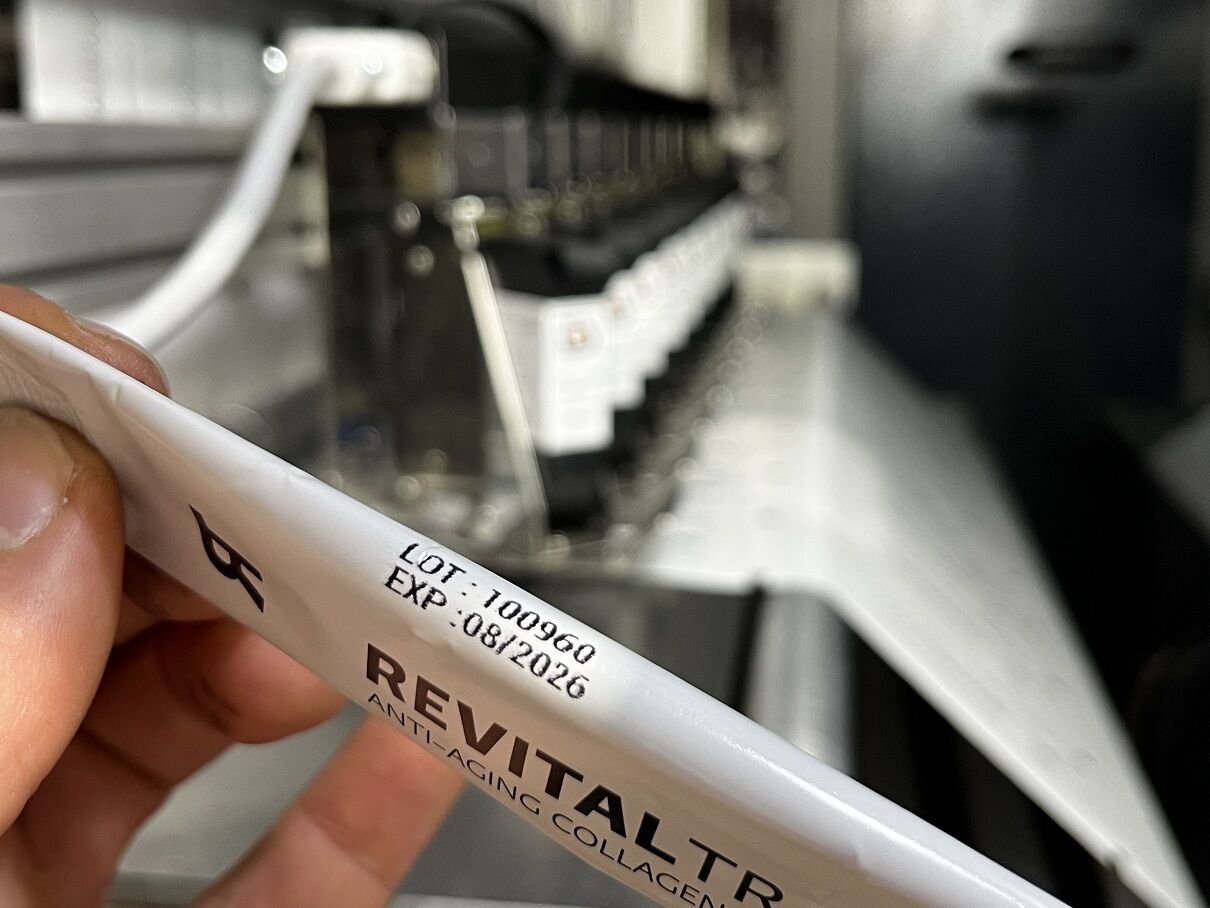
Feedback from TS Electronics
“This installation was not our first, and I sincerely hope it will not be our last. With every new installation, we build upon the experience gained from previous projects and continuously improve the reliability and user-friendliness of our equipment. Achieving this is difficult through theory alone; it requires validation in real production environments, which our cooperation with NOMATECH enables. I also highly appreciate the excellent level of technical communication. NOMATECH precisely specifies the printing requirements, and we at TSE manufacture, deliver, and integrate the equipment accordingly—everything fits and works correctly from the very first installation.”
We can design a solution tailored to your product type, required output, and coding requirements. We help integrate packaging, coding, and downstream processes into one efficient production line.